
Hello, this is Refind.
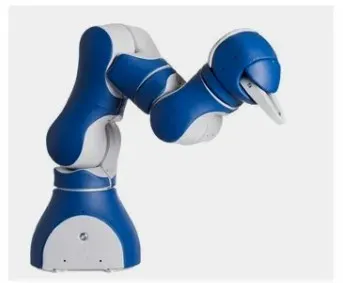
Today, we’re taking a closer look at 6-axis robots and how they’re reshaping the field of medical research.
Modern medical technology is advancing rapidly through the fusion of precision robotics and artificial intelligence (AI).
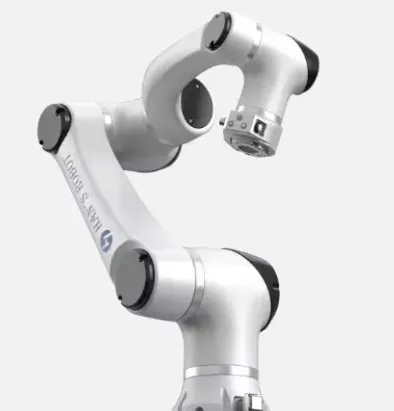
Among these innovations, 6-axis robots — equipped with six degrees of freedom (6DOF) — enable complex and delicate movements,
playing a central role in surgical assistance and minimally invasive research.
The Potential of 6-Axis Robots in Medical Research
6-axis robots bring a new level of precision to medical research.
By combining horizontal and vertical movement with rotational control (Roll, Pitch, and Yaw),
they enable highly accurate manipulation in minimally invasive surgeries and tissue analysis.
For example, these robots are used in endoscopic procedures and tissue sampling,
performing stable and precise tasks in areas that are difficult for the human hand to reach.
Their multi-axis control not only enhances surgical accuracy and reduces patient recovery time,
but also improves efficiency in repetitive experimental workflows within research environments.
Recent advancements have made 6-axis robots even more suitable for medical settings,
offering the precision and stability required for a wide range of surgical scenarios.
Expanding Horizons: The Future of 6-Axis Robots in Medicine
6-axis robots are continuously expanding the boundaries of medical research,
serving as a driving force behind patient-centered innovation.
They are being applied in robot-assisted surgery, drug delivery studies,
and surgical simulation — where their multi-axis control allows realistic, complex motion replication.
In line with the 2025 medical robotics trend,
6-axis robots are expected to become essential tools for minimally invasive procedures and AI-assisted diagnostics.
Looking ahead, the scope of these systems is likely to expand to include remote surgery (teleoperation)
and neurosurgical research, such as microscale tissue manipulation.
Ultimately, 6-axis robots are becoming indispensable instruments that extend precision and control for researchers in medical science.