
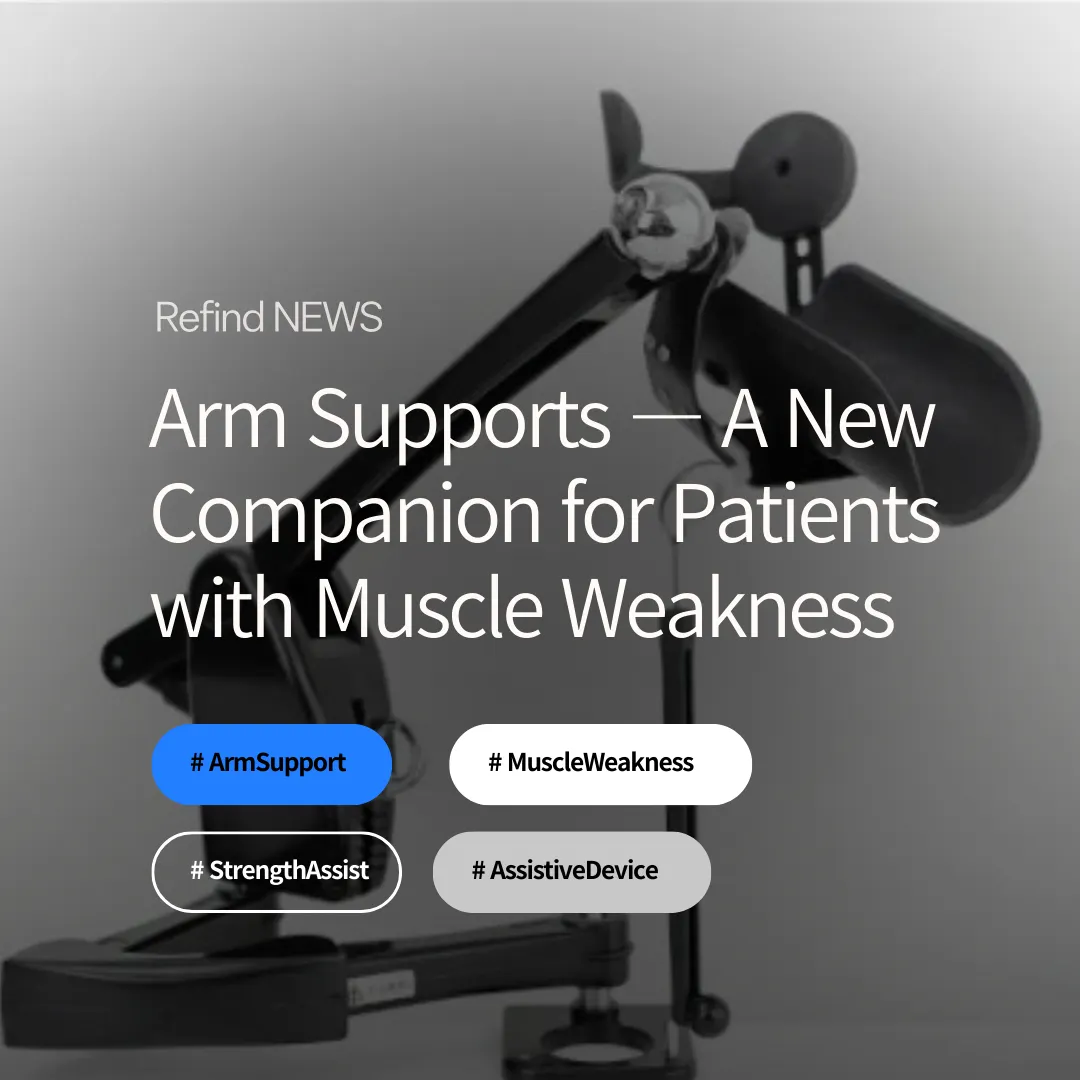
The arms are among the most frequently used parts of our body in daily life.
From small actions like eating or lifting a cup, to reaching for objects on a desk—almost everything involves arm movement.
However, when arm strength weakens due to stroke, muscular disorders, or prolonged hospitalization, even these basic motions become difficult.
Being unable to lift one’s arm despite wanting to can cause great inconvenience and may even lead to a loss of confidence.
This is where an assistive device—an arm support—comes in to help restore movement.
An Arm Support Is More Than a Simple Brace
It does more than just hold the arm in place.
It assists movement based on the user’s muscle strength,
lifting the arm naturally as if the user’s own muscles were doing the work.
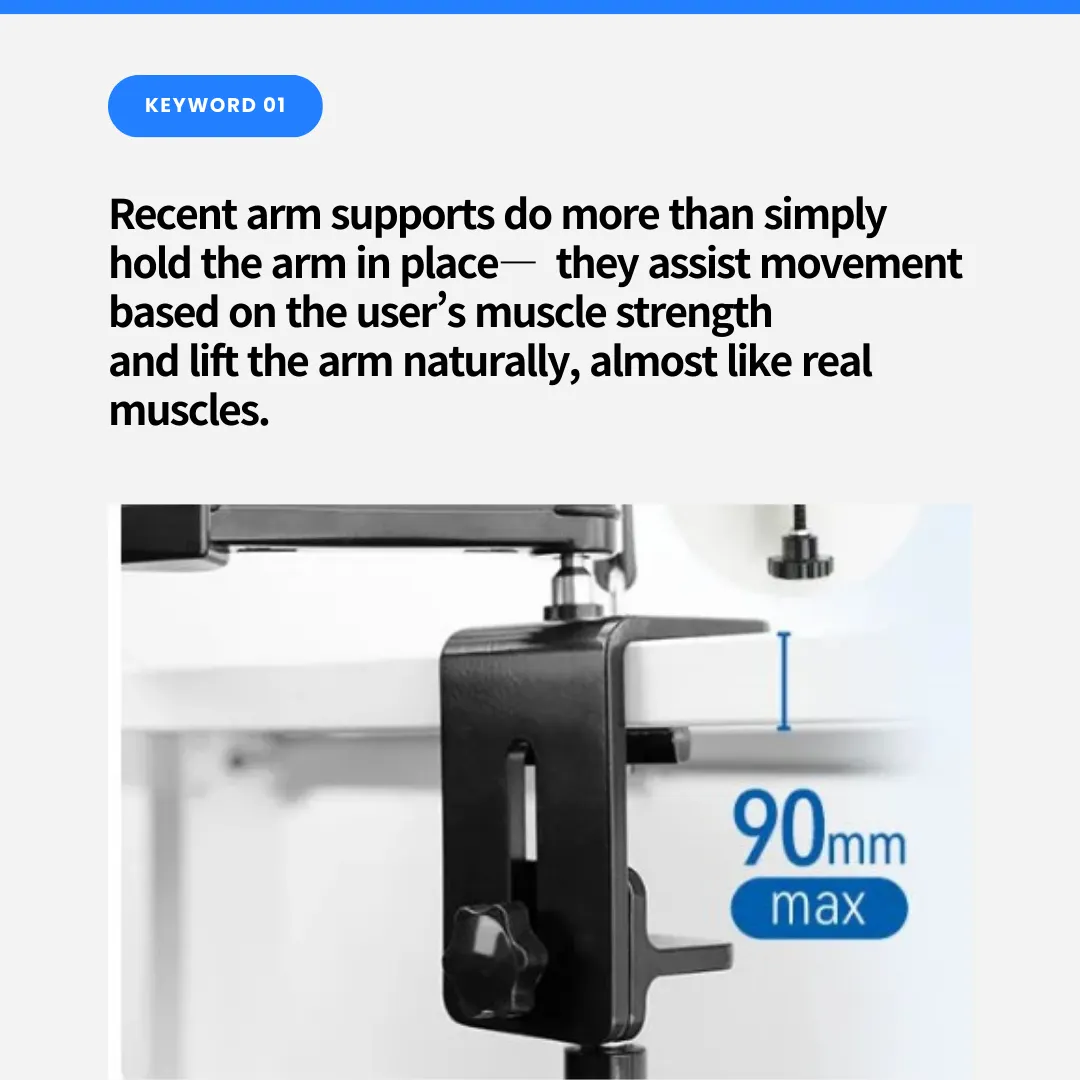
Recently popular 3D arm supports can be installed on desks up to 9 cm thick
and assist arm movement within a wide range—up to 30 cm vertically and 92 cm horizontally.
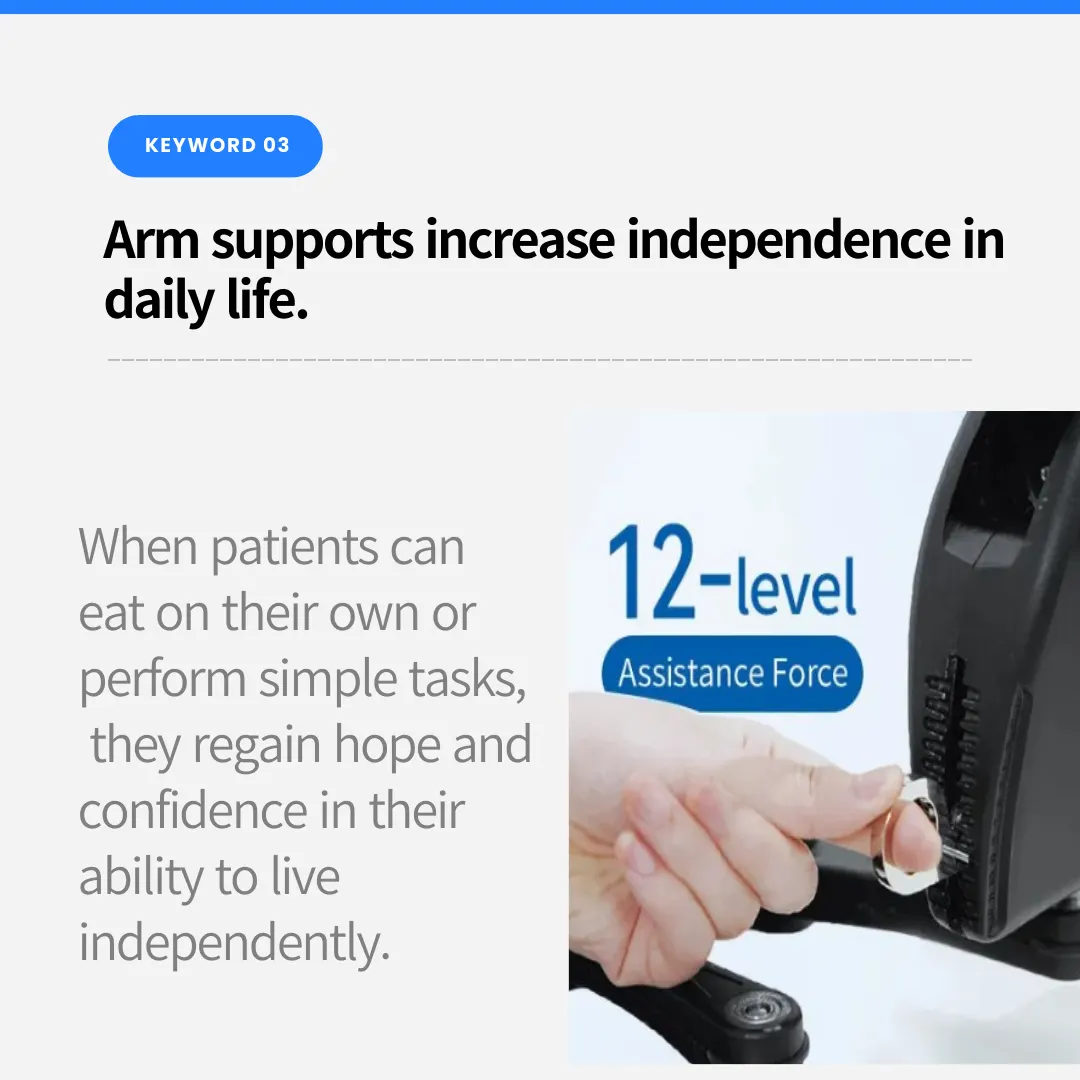
In addition, the support force can be adjusted in 12 levels, allowing fine-tuned customization based on the user’s condition.
Patients with almost no strength need strong assistance, while those gradually recovering can reduce the support little by little to practice moving on their own.
Arm supports are especially effective for:
•
individuals with weakened arm strength after a stroke
•
patients with muscular atrophy or neurological disorders
•
people whose muscles have weakened due to long-term hospitalization
Regaining Small Movements—Even With Minimal Strength
With this device, patients with very little arm strength can attempt simple movements again.
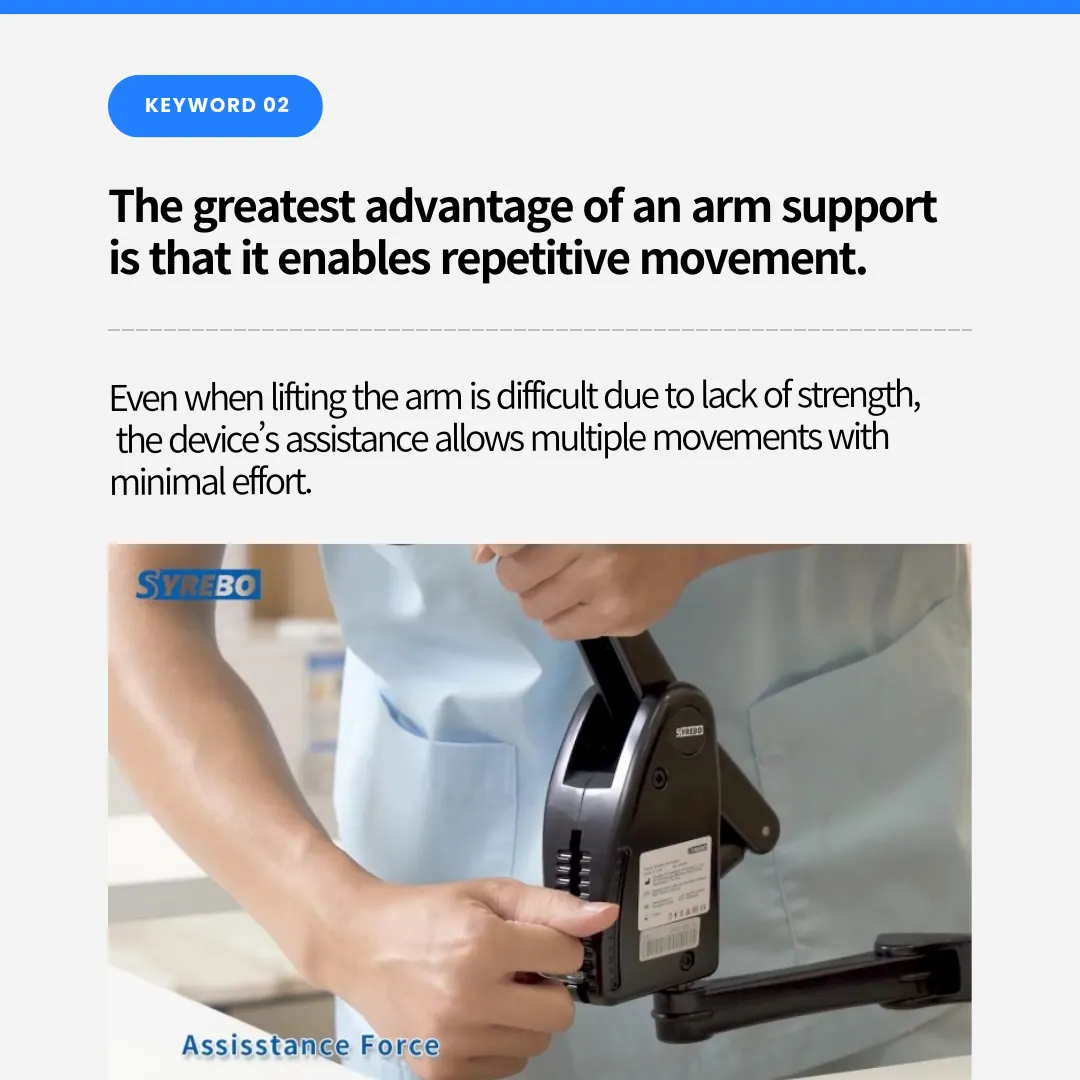
Because it provides up to 4,450 g of assistance, the arm can be lifted and moved with minimal effort.
Both vertical and horizontal directions can be freely adjusted, supporting a wide range of motions needed for daily life.
The greatest benefit of an arm support is that it enables repetitive movement.
Even if lifting the arm is difficult, the device’s support allows repeated motion with very little effort.
This repetition plays an important role in rebuilding arm strength and provides psychological comfort by restoring confidence in one’s ability to move independently.
Beyond Exercise: Restoring Independence in Daily Life
The arm support does more than assist exercise—it helps restore daily independence.
When a patient can eat alone, pick up objects on a desk, or perform simple tasks,
they regain hope that they can live more independently.
At the same time, reliance on caregivers decreases, easing the burden on families.
Ultimately, the arm support is more than a convenience tool—
it is an assistive device that significantly improves the quality of life for patients with weakened muscles.
As small movements become possible again, patients gain renewed energy,
and that experience becomes the driving force for returning to everyday life.
The arm support stands by the patient as a reliable partner on that journey.