

Industrial robots have moved beyond simple automation machines to become the core infrastructure of the Smart Factory. The convergence of AI and sensor technology is bringing manufacturing productivity and precision into a new era.
In this post, we will examine the roles of the two main pillars of industrial robotics—the robot arm and the robot hand (end effector, ROHand)—and explore the powerful synergy that emerges when they are combined.
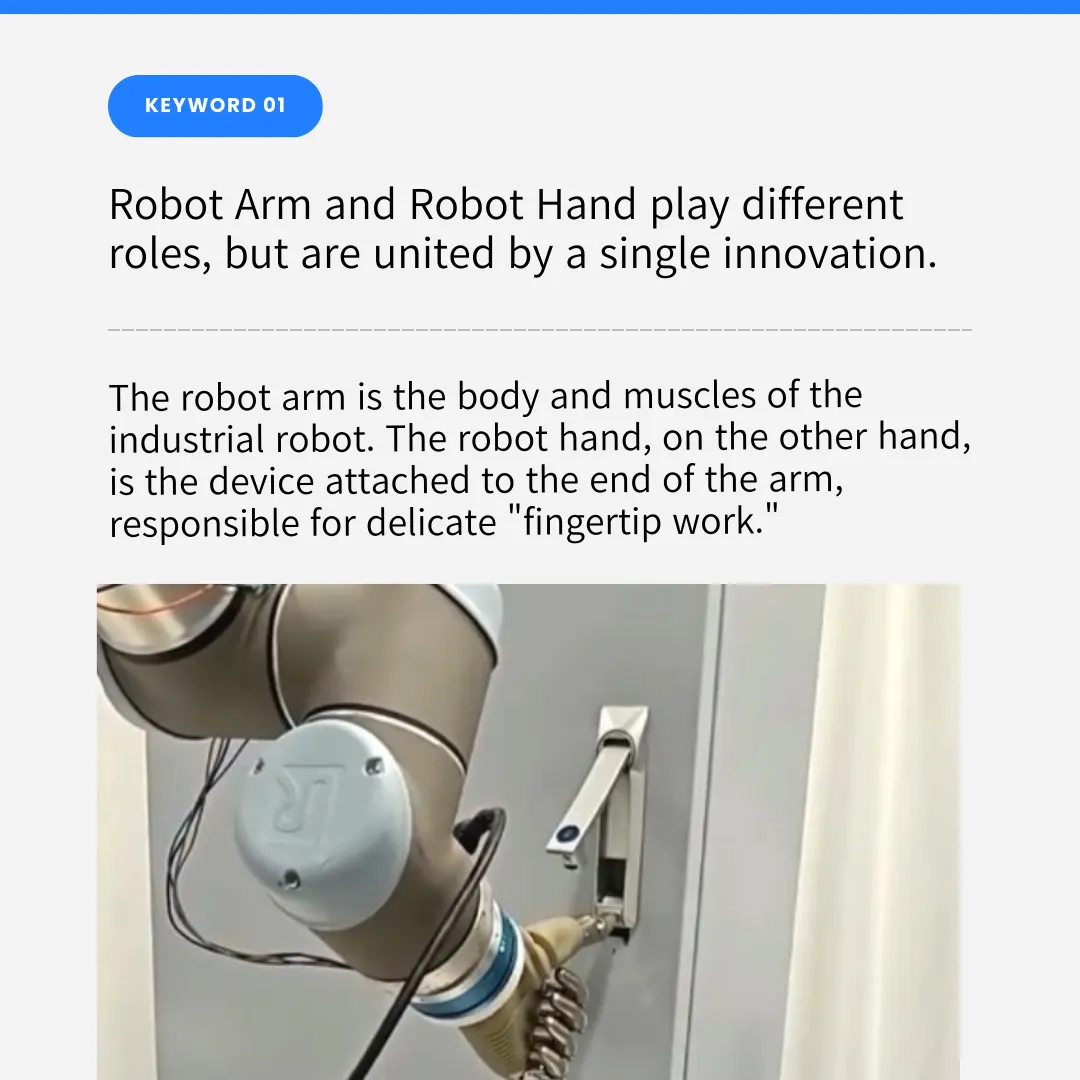
Robot Arm and Robot Hand: Different Roles, One Innovation
The Robot Arm is the body and muscles of the industrial robot. Designed with multiple degrees of freedom (typically 6 axes or more), it handles complex spatial movement and posture control. It performs repetitive tasks such as moving heavy components, welding, or picking and packaging.
For instance, the FANUC R-2000iB series can handle payloads up to 210 kg, making it widely used in the automotive, electronics, and logistics sectors.
The Robot Hand (End Effector / ROHand) is the device attached to the end of the robot arm, responsible for delicate 'fingertip work'. It is equipped with grippers, force sensors, and cameras, enabling it to pick up tiny components or handle materials without causing damage.
REFINDE’s ROHand is one such product, designed with lightweight architecture and precision pressure sensing technology, making it suitable for highly demanding precision environments like semiconductor, battery, and electronic component manufacturing.
 In summary: The robot arm provides the foundation for movement, and ROHand provides the precision of the task. Although they are different products, true innovation is realized when they work together.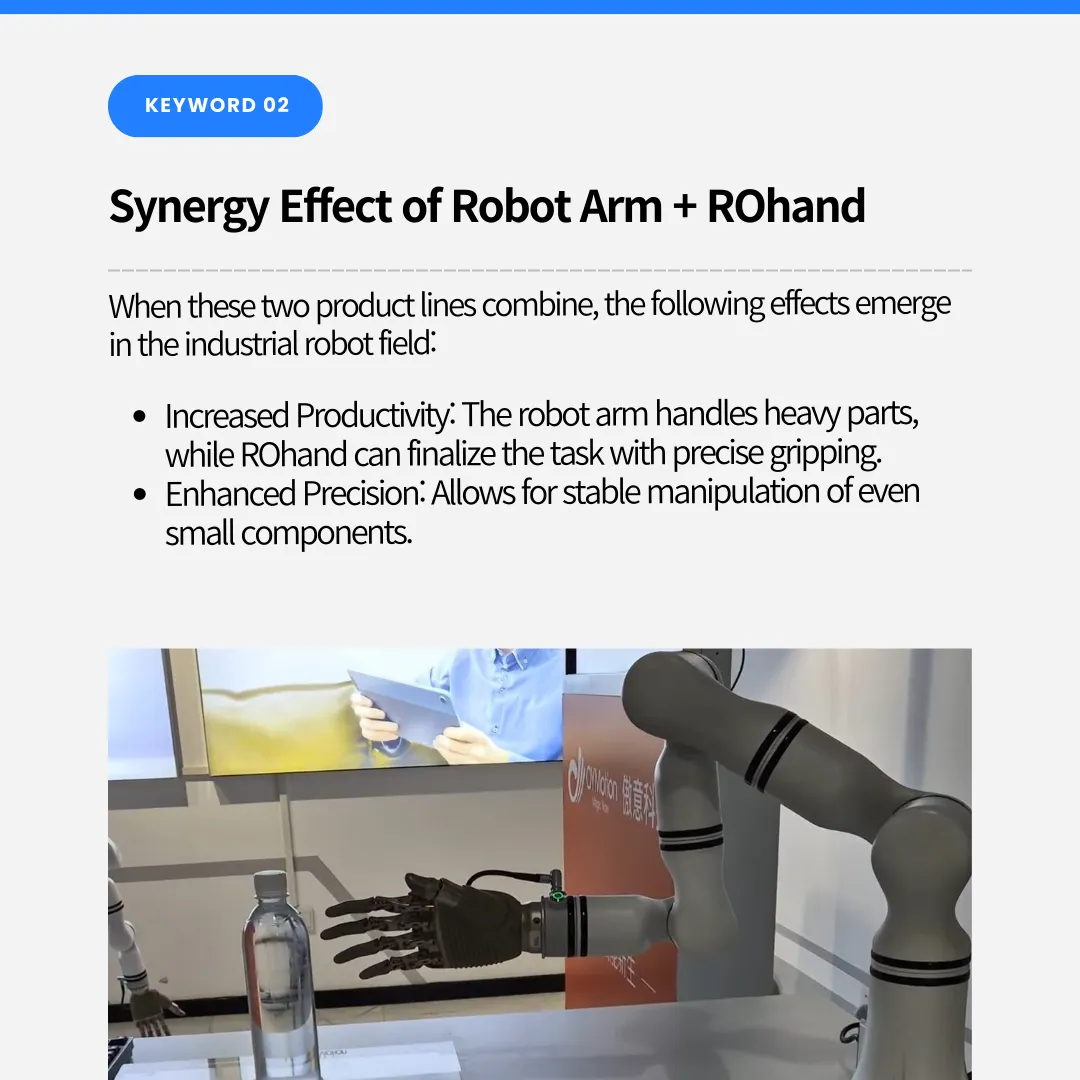
The Synergy of Robot Arm + ROHand
When the two components are combined, the following effects emerge in the industrial robotics field:
•
Enhanced Productivity: The robot arm handles large movements and heavy parts, while ROHand provides the fine-grained grip for the finish, improving both speed and quality.
•
Increased Precision: Small components, such as semiconductor chips or battery cells, can be manipulated stably and accurately.
•
Quality Control: Sensors contribute to reducing defect rates by detecting flaws in real-time.
In fact, the "Arm + Hand" combined system is increasingly being adopted in many manufacturing sites and is establishing itself as a smart factory standard in the electronics, automotive, and aerospace industries.
Global Industrial Robot Market and Trends
The global industrial robot market was valued at approximately $20 billion in 2024, with expectations of steady growth at a Compound Annual Growth Rate (CAGR) of 10-14% through 2030.
Demand is rapidly increasing, especially in the automotive, electronics, and battery manufacturing sectors. This growth is driven by the simultaneous realization of value in safety, sustainability, and quality improvement, going beyond simple cost reduction.
Challenges and Future Outlook
Naturally, the adoption of industrial robots faces challenges:
•
Initial Investment Cost: Still a burden for small and medium-sized enterprises (SMEs).
•
Skills Gap: Specialized talent is needed for robot system integration, sensor tuning, and software control.
However, there are positive developments:
•
Lowering Barriers: Open-source platforms like ROS-Industrial are easing entry barriers.
•
Talent Development: The expansion of education and training programs is addressing the skills gap.
•
Enhanced Collaboration: 5G, Edge Computing, and AI Vision technologies are strengthening real-time cooperation between robots.
The global industrial robot market is expected to grow to over $30 billion by 2030, and the importance of end effector products like ROHand will continue to expand.
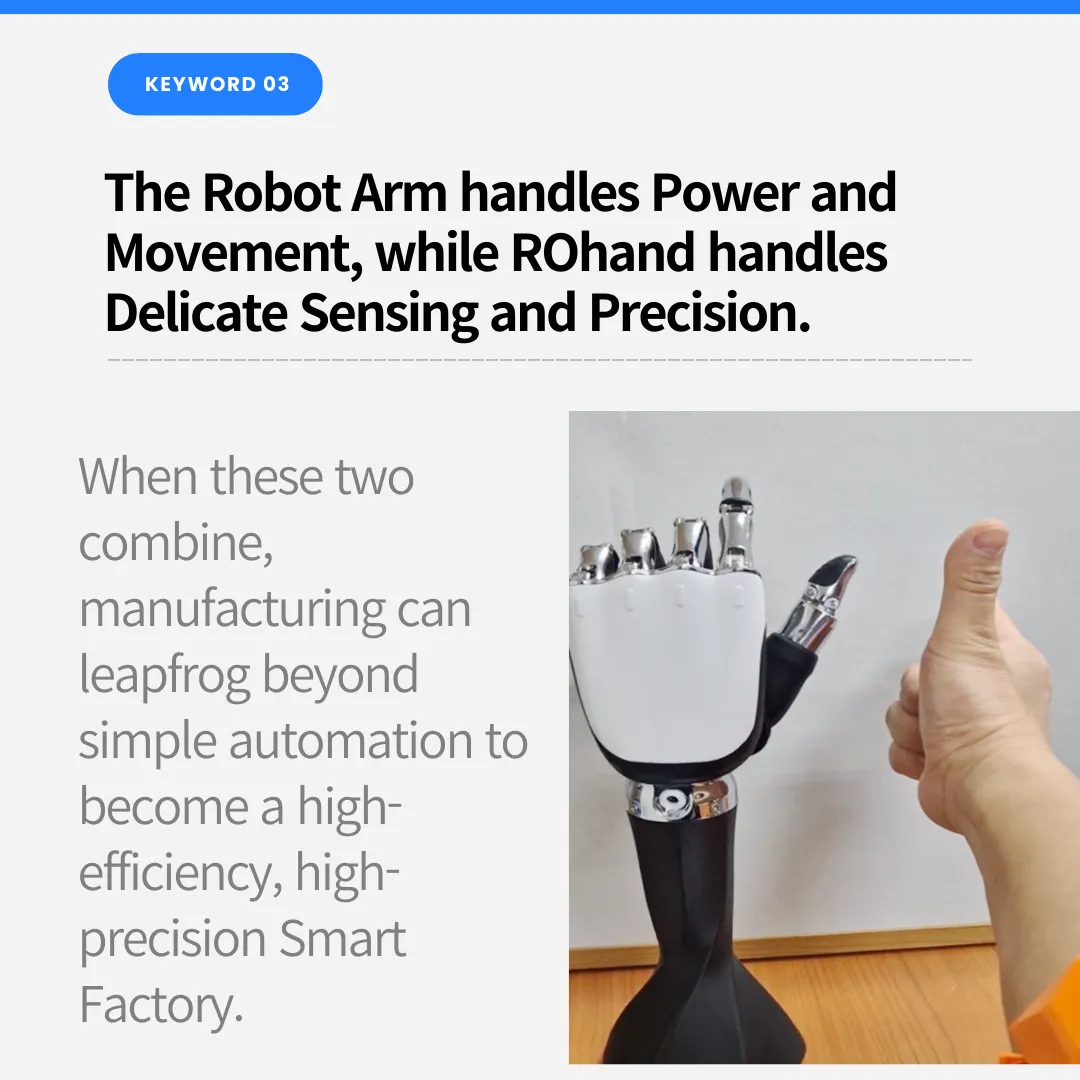
The robot arm manages power and movement; ROHand manages delicate sensing and precision. When the two combine, manufacturing can leapfrog beyond simple automation to become a high-efficiency, high-precision Smart Factory.
REFINDE stands at the heart of this transformation through ROHand, and more manufacturing sites will soon experience the powerful "synergy of the arm and hand."