
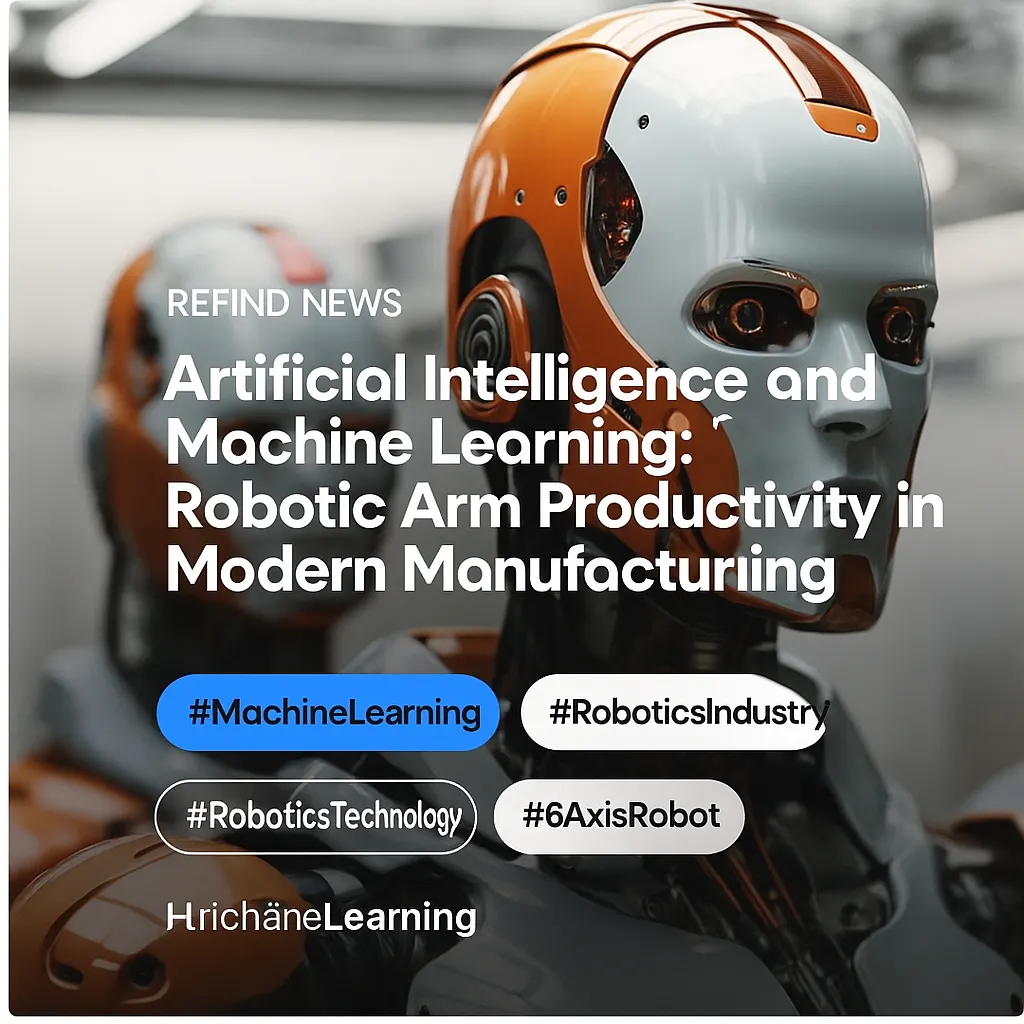
In 2025, the manufacturing industry has entered an era where artificial intelligence (AI) and machine learning (ML) are not just tools, but the core of industrial productivity.
Gone are the days of simple automation — now, data-driven decision-making is transforming how factories operate.
 AI and ML in Manufacturing: How It Works
AI and ML analyze massive datasets, learn patterns, and make predictive decisions.
In manufacturing, they process sensor data from machines to optimize production lines.
For example:
•
ML algorithms analyze vibration and temperature data to predict mechanical failures, reducing downtime.
•
AI-based optimization dynamically adjusts speed, pressure, and energy consumption across production systems.
According to the 2025 Rockwell Automation Report,
AI-driven optimization has increased manufacturing productivity by 20–30% on average.
Similarly, Ultralytics Research shows that ML training improves robotic accuracy and adaptability — from supply chain optimization to quality control, AI is redefining every stage of production.

The Synergy Between AI, ML, and Robotic Arms
Robotic arms are no longer simple mechanical tools — with AI and ML integration, they have become intelligent assets of modern manufacturing.
According to NetSuite, ML systems now learn the movement patterns of robotic arms to enhance production precision and quality control.
For instance, AI can calculate the optimal movement path, increasing work speed by up to 15%.
Furthermore, Labellerr’s 2025 Report highlights that smart robotic arms continuously learn through real-time data feedback, achieving higher autonomy.
As Robotnik Research points out, AI-integrated robotic arms are now the core of industrial automation trends — adaptive, fast, and self-correcting.
Precision and Intelligence: Refind’s ROhand Series
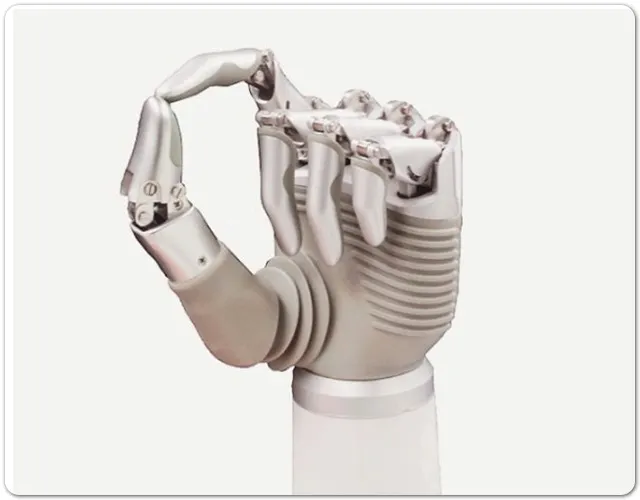
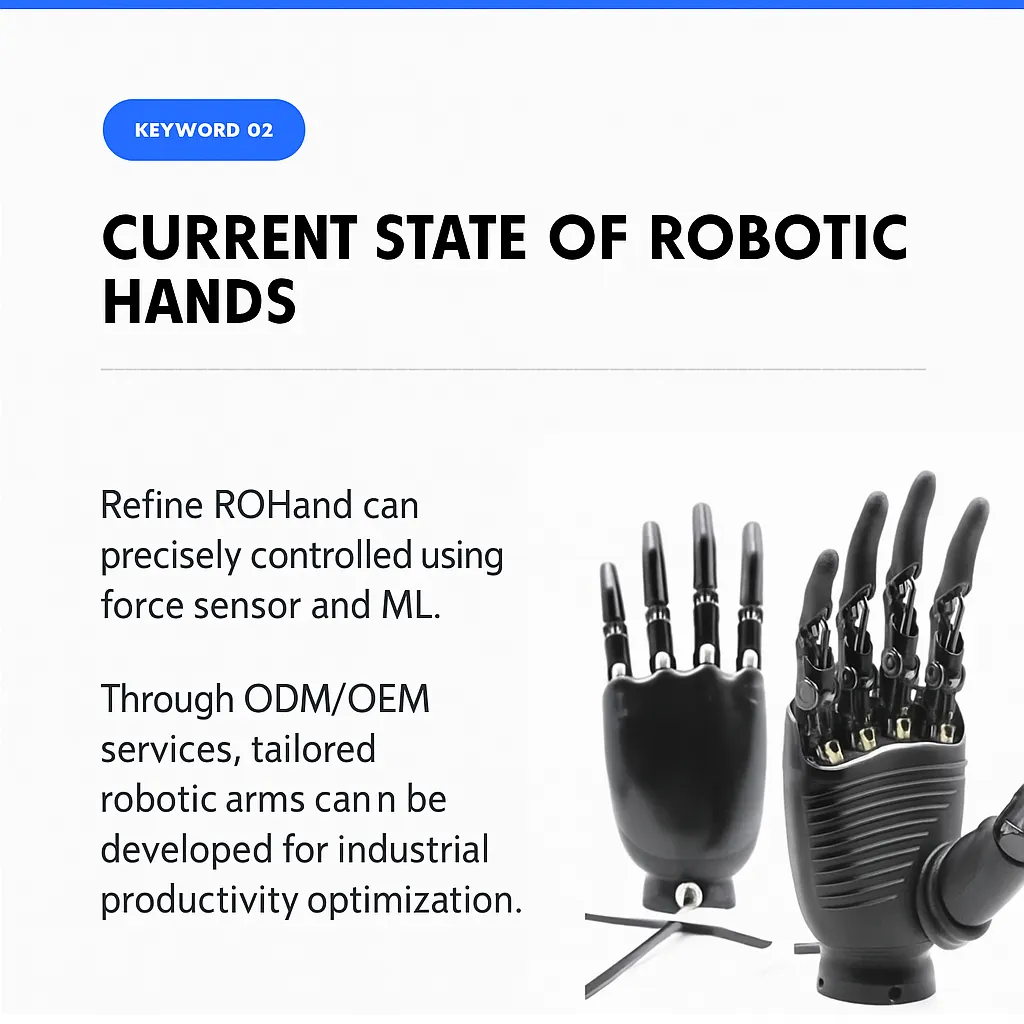
Refind Inc. is leading this transformation with its ROhand Series, designed for precision control through force sensors and ML-based algorithms.
ROH-AP001
•
Equipped with force sensors for fine pressure detection
•
Automates quality inspection and improves consistency
ROH-LiteS001
•
Lightweight (457g) design for multi-unit deployment
•
Ideal for collaborative robotic environments
•
Supports ODM/OEM customization for industrial applications
These robotic hands bridge the gap between machine and intelligence — delivering precision, adaptability, and productivity.
Future Outlook: Smart Factories and the Rise of “Physical AI”
The fusion of AI, ML, and robotics is driving the evolution of the Smart Factory — where physical machines are capable of autonomous learning and adaptation.
According to the World Economic Forum, “Physical AI” is redefining the concept of industrial automation, enabling systems that sense, think, and act in real time.
In this new era, AI-driven robotic arms are not just manufacturing tools —
they are decision-making collaborators, transforming production into an intelligent ecosystem.
Conclusion
•
AI and ML are the new engines of industrial growth.
•
Robotic arms like Refind’s ROhand translate intelligence into precision.
•
The future of manufacturing lies in human-AI collaboration and adaptive automation.
The convergence of AI and robotics is no longer the future —
it’s the new standard of productivity.